
Dünya Newspaper Interview Tuncay KORU
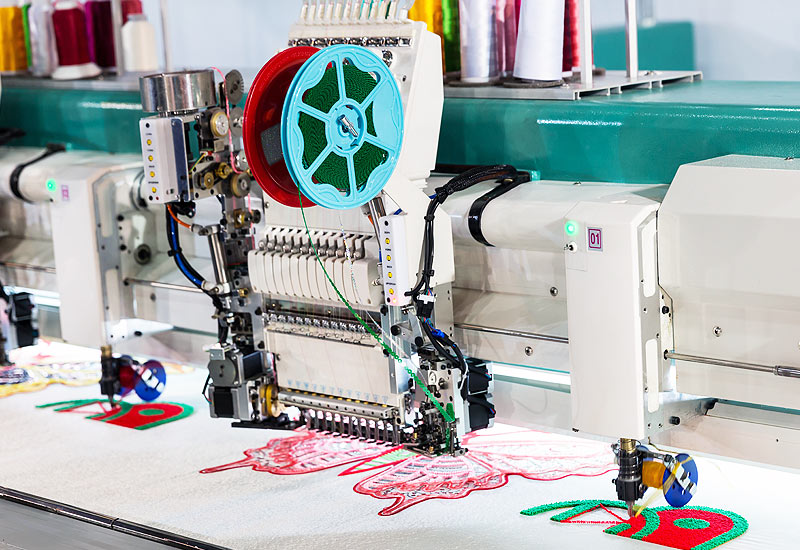
Apparel automation machine manufacturers joined forces. President Tuncay KORU announced that they established an association as a specialist NGO to identify the problems and development needs of the sector and find solutions to them. Stating that the current import restrictions and passive customs barriers are among the most important problems of the garment automation machinery industry, Koru emphasized that even a simple fabric sample, which has no commercial value, has been stuck in customs for the last year and a half.
HASANKUŞ/İSTANBUL
Apparel Automation Machinery Manufacturers Association (KOMİD)
President Tuncay KORU announced that they established an association as a specialist NGO to identify the problems and development needs of the sector and find solutions to them. Stating that the current import restrictions and passive customs barriers are among the most important problems of the garment automation machinery industry, Koru emphasized that even a simple fabric sample, which has no commercial value, has been stuck in customs for the last year and a half. Noting that, naturally, customs clearance and imports cost high prices and cause loss of time, Koru said, “Likewise, defective parts and components such as PLCs and screens that come to Turkey for repair are treated as new products at customs. Most of the time, the tax and customs clearance costs exceed the repair value of the goods or even the cost of the new one. We have difficulty in explaining this situation to our customers due to the strategy of slowing down imports with passive measures.”
“Visa barrier increases the cost burden” Tuncay KORU also noted that the necessity of obtaining a visa, even in friendly countries such as Pakistan and Bangladesh, in terms of sales and marketing, brings with it the burden of paperwork and cost, as well as serious time losses. He stated that it can be solved by ensuring that it is valid for at least one year, or even longer if possible. Koru said that this method is both more realistic and that its acceptance and implementation will be a more widespread and sustainable solution than the green passport application. Stating that industry companies should not see CE and ISO documents as just documents, Tuncay KORU said, “These documents should be seen as a roadmap for raising quality standards and maintaining them in a sustainable way. On the other hand, one of the best aspects of European manufacturers is the completeness of the installation and user manuals of machines and vending machines. In fact, it is one of the indispensable factors for lasting success in the global market that it is prepared in the local languages of the countries with which sales are made when necessary, as well as in English.
Noting that the establishment of the Apparel Automation Machinery Manufacturers Association was completed in August 2020, Tuncay KORU stated that it was established as a specialized NGO to identify the problems and development needs of the industry and find solutions to them. Stating that the association includes domestic manufacturers and stakeholders that produce machinery, automation, accessories and technology for factories that only produce apparel/clothing, Koru emphasized that the association, which has reached 45 members as of the end of November, aims to reach 60 members in the next three months and all stakeholders by the end of 2021. .
On the other hand, Tuncay KORU noted that the pandemic has changed the supply and demand balances in the sector, highlighting the production of medical masks and clothing, as well as vending machines for their untouched packaging.
The sector has almost reached the saturation point in terms of machinery supply as of the end of the third quarter of 2020.” Koru also stated that after the pandemic, the production of technical textiles and technical apparel will increase gradually and accordingly, traditional sewing-based apparel manufacturing will be gradually moved away.
